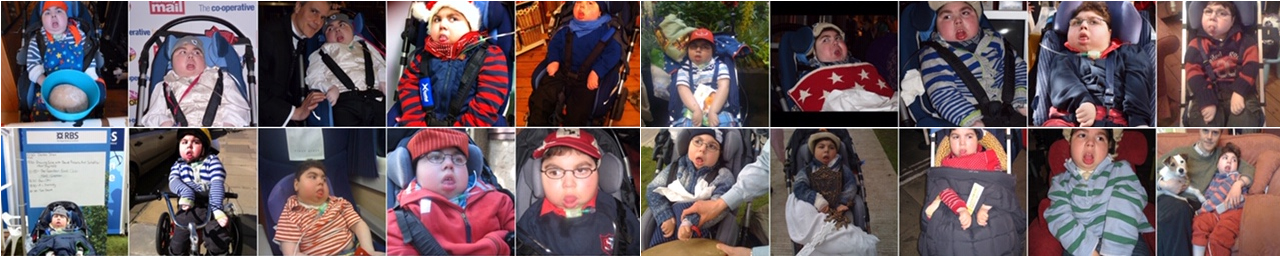
Being an ‘Inbetweener’ – A Reflective Paper
The following is a personal reflection, written by AdsFoundation director and Adam’s mum, Dr Zoe Picton-Howell soon after she completed by PhD back in 2018, on the impact of her personal, academic and professional background on her PhD study ‘UK Paediatricans’ medical decision-making for severely disabled children – a socio-legal analysis’ and on Adam’s end-of-life healthcare.
Abstract
In this reflective paper I, being an English qualified solicitor and bereaved parent of a disabled child with significant health problems, reflect on the impact my personal and professional background had on my doctoral study of UK paediatrician’s medical decision making for severely disabled children. I also discuss the ethical challenges this produced and how these were addressed. I also reflect on the possible impact of both my professional status and my PhD studies on Adam’s medical treatment, particularly during the last weeks of his life. I conclude that fear of the law may have impacted on the behaviour of some of the doctors treating Adam and conclude better legal education for doctors could help address this fear.
Personal Influences
My personal background as Adam’s mother was a profound influence on me embarking on my thesis. Adam, who lived with severe physical impairment, multiple, and very significant health problems was largely typical of the children who were the focus of my study. He was perhaps also atypical, being educationally bright, with no cognitive impairment. Adam spent a combined total of over eight years of his life in hospital, which in turn meant that I spent over eight years of my life in UK children’s hospitals, engaging with medical and nursing staff and for much of the time sitting observing. Adam was born in 2000 and acquired severe cerebral palsy within the first hour of his life due to hypoxia during delivery. Adam later acquired significant complex health problems. He died, (while I was researching my thesis), from sepsis in 2015.
Adam received care in seven different hospitals in the United Kingdom, a combination of district, tertiary and specialist children’s hospitals, ranging geographically from the south coast of England to Scotland. Moreover, because he had several serious health problems, he was seen by specialists from several paediatric sub-specialties, including general paediatrics, neurology, respiratory medicine, endocrinology, metabolic medicine, gastroenterology, ear nose and throat, intensive care, and emergency medicine.
Over the years, it intrigued me that paediatric consultants could see the same child presenting with the same symptoms at the same moment very differently. I began wondering why this was and what influenced the doctors in their decisions and attitudes towards Adam. I perceived cultural differences not just within different hospitals, but also between departments within the same hospital. Different consultants often had completely disparate views of Adam and his state of health despite at times reviewing him within minutes of each other. At times the contrast was extreme, with, for example, two consultants from different specialities viewing him within minutes of each other, one declaring him fit for home and the other saying he needed admission to paediatric intensive care (PICU). Doctors who regularly saw him also ranged in their assessment of his cognitive ability from being educationally gifted with no cognitive impairment at all, to having no awareness at all and being totally unable to communicate.
This should be read in the context of Adam’s life more generally and, for example, his attendance at mainstream school. He was always at the top end of the ability range educationally for his age. He was in the top stream at secondary school. He blogged and wrote multi-award-winning poetry and as a teenager was regularly commissioned to write by organisations such as the National Health Service (NHS) and charities. He won multiple national and international awards for both his writing and health advocacy. It seemed that paediatricians’ totally contradictory assessments of Adam, whether of his medical or cognitive state, could not all be simultaneously correct. This led me to ponder what were doctors basing their judgments upon if not on Adam? This in turn led to one of the research questions in my thesis, an inquiry into what factors paediatricians take into consideration when deciding for disabled children.
As Adam’s mother, with a legal background and researching a PhD in best interest decisions, I was also invited over a period of time to serve on numerous committees with health professionals. For example, I was a member of various committees of the Scottish National Clinical Network for Children with Exceptional Health Care Needs[i]; a member of Child Health UK Epilepsy Death review[ii]; a member of NICE’s End of Life Care for Children and Young People’ Expert Guidelines Committee[iii]; and a specialist member of the NICE Quality Assurance Committee for the same guideline. I was also co-opted on to various Royal College of Paediatrics and Child Health committees including its Council and Ethics and Law Advisory Committee. I also served on steering committees dealing with human rights and equality for the NHS in my region. I served on numerous other regional and national research, guidance and investigations committees, all with a focus on child health, often disabled children’s health.
These appointments also meant that I was often a joint author of the statutory or professional guidance the healthcare teams caring for Adam were expected to follow. I knew not just the detail of the guidance but was also familiar with the systematic research reviews and discussions that underpinned it.
From the very beginning of my research, I was conscious that my personal experiences would have a significant impact on my study. The ethical issues this raised are discussed later in this paper. I was coming to my research with years of experience of having observed literally hundreds of doctors making difficult decisions about a disabled child with significant health problems. I had seen many doctors provide Adam with what I regarded as first class treatment and care, but I had also seen a small but significant minority treat Adam in ways that distressed and horrified me (and him). I was aware that I was bringing to my research strong opinions on the matters being researched and with considerable experience of at times, observing, at other times being involved in and at times being excluded from, the types of decisions which were the subject of my study.
I was very conscious from the start of my study that it was not a subject I could approach with total emotional detachment. My status as Adam’s mum prepared me, I believe, for any potentially distressing comments doctors may make about disabled children and enabled me to remain detached.
Professional Influences
I also brought my professional training and experience as an English qualified solicitor to my research. Not only did I spend years observing the care a severely disabled child received through the eyes of a mother, but also through the eyes of a solicitor and one with particular interest in child and human rights and expertise in child healthcare law. My observations of doctors were coloured by my training and experience as a solicitor, a profession where respect for the law, ethics and professional conduct is paramount. Moreover, during the later years of my research I was teaching both medical and law students. The former I taught on their health, ethics and society course, including topics such as disability and health inequalities. The later I taught across the undergraduate syllabus, including topics such as medical negligence, gross negligence manslaughter and child protection law. I engaged with students repeatedly about these subjects and was clearly also required to keep up to date with the latest developments in the law. I was also a trustee and director, for much of Adam’s life, of the Scottish Alliance for Children’s Rights, the body charged with monitoring the implementation of the United Nations Convention for the Rights of the Child (‘UNCRC’) in Scotland. One of the organisation’s tasks is to draft the Scottish contribution to the civil society report on the UK’s implementation of the UNCRC for the UNCRC expert committee, in preparation for that committee’s periodic reviews of the UK. I was tasked with writing a report on the state of disabled children’s rights in healthcare across the UK for the 2008 civil society report. The UNCRC Committee’s Concluding Observations on the UK directly quoted my report. This professional expertise inevitably framed how I perceived the healthcare Adam received and the actions and values of the doctors involved in Adam’s care, which in turn fed into my research questions, such as an inquiry into the extent of the doctors training in law and ethics.
My thesis explored how the paediatricians I surveyed and interviewed made sense of the law in their everyday lives using a legal consciousness theoretical framework.[iv] This is a socio-legal framework originally developed in the USA to explore how marginalised individuals and groups make sense of the law in their everyday lives. My study found the doctors expressed a range of perceptions of the law, with at times individual doctors seeing law as a shield, to protect the doctor and at other times as a sword, something to be feared, as a threat to the doctor’s livelihood. Despite working in a nationalised healthcare system created by an act of Parliament, only two of the thirty-three senior consultant paediatricians in my study suggested they understood the law as providing the framework within which they worked. The rest described the law just in terms of litigation, particularly criminal litigation.
My status as a solicitor also meant that Adam grew up in a particular social and economic environment. This enabled him, up to a point, to maximise his potential, both in terms of his health and education. This of course, is an influence that my professional status had on Adam’s care, a question I consider later in this paper, rather than on my research. However, I suggest that the two are interlinked. My status as a solicitor gave me a very particular experience of parenting a disabled child with significant health problems, in many ways different, in some respects more positive and in some respects more negative, than other parents in a similar position. It is my very particular experience that led me to my thesis.
I would also suggest that my status as a solicitor helped me to be cognisant of being overly subjective and to maintain a more professional detachment when interviewing doctors. My professional training and practice taught and educated me to weigh up the evidence; to come to a judgment on the merits of an issue, not by ignoring the emotional impact of the decision, but by detaching myself from the emotional impact on me and others.
Research Ethics Implications
My status as a parent of a disabled child with significant health problems and, in the later years of my study as a bereaved parent, put me in a particularly vulnerable position as a researcher. Much thought was given in preparing, particularly for the interviews, as to the sort of information the doctors may impart, unaware of my personal situation. Consideration was, for example, given as to how I would deal with any distressing information encountered in the survey responses and more particularly in the interviews. My many years of engaging with doctors as a parent was seen as an asset, since I was not unfamiliar with the types of comments some doctors could unwittingly make about disabled children. My significant experience of working with doctors on research; guidance and national investigation committees involving this same demographic of children also meant that I was not unaccustomed to hearing. for example, the deaths of children being discussed in a dispassionate manner. My experience as both a practising lawyer and a university tutor was, I believe, also helpful in maintaining a professional distance. In the first of these roles, I was used to recognising the emotion involved in cases but maintaining my professional distance from it. In the second, teaching both law and medical students, I was used to protecting myself emotionally during discussions with students about the law and ethics surrounding both the healthcare and death of disabled children.
I discussed at length with my PhD supervisors the issue of the whether doctors should be made aware of my personal circumstance. We agreed that this should not be revealed, unless a doctor expressly asked (in which case it was felt important to be honest with doctors). (Several doctors did ask at the end of their interviews, having assumed I was also a medic.) This decision was based on the importance of the doctors responding to the survey and interview questions, without being influenced in their answers by my personal or indeed professional status.
My study excluded doctors working at the hospital where Adam had most of his care at the time of the survey and interviews. The hospital was a physically small one. Even doctors from that hospital who had not worked with Adam were excluded, as it was likely they would know of him, and there was a real possibility that they may have worked with him in the future. It also excluded doctors at other hospitals who had worked with Adam, but not doctors generally, due to the low likelihood of those doctors knowing me as a parent or working with Adam in the future. One doctor who responded to the survey did subsequently become directly involved in Adam’s care. He was therefore not approached for interview, although his survey responses were kept within the results. I intended seeking that doctor’s consent to keep him in the study, but the doctor was removed from the GMC register, for unrelated reasons, before the request could be made.
A decision was made not to exclude all hospitals completely where Adam had received care, as they were much larger and Adam had received only short-term care from a small number of staff. Excluding all doctors from all these hospitals was thought to be unnecessary. It would have excluded too many potential participants from my research and excluded doctors from most of the UK’s children’s hospitals with no knowledge of me or Adam.
Adam died from sepsis while my thesis was being researched and written. All the empirical data had been generated prior to his death. The particular circumstance of Adam’s death made reading and analysing much of the data exceptionally traumatic. I dealt with this by taking time away from my thesis when needed and seeking (albeit with little success due to being told it was unavailable whilst the circumstances of Adam’s death during a prolonged hospital stay were being investigated), professional bereavement support. I found health professional friends particularly supportive during this difficult time.
I was mindful of the possibility that I could allow my personal and professional experience to interpret what the doctors said in their interviews in a particular light, rather than capture the meaning the doctors intended. Indeed, my experience of reading Adam’s medical notes where discussions I had had with doctors were recorded, but where a gloss which did not in any way reflect either my words or intended meaning has been put on things I had said, had made me particularly cognisant of this possibility. To try and avoid this as far as possible, with each doctor’s permission, I made a digital recording of each interview and transcribed the interview in full. I also gave each doctor the option of reviewing his or her transcript, although no doctor took up this offer.
Discussion
Having to consider the impact of one’s own personal and professional experiences and having close links with the subject being researched, is not an unusual one for a researcher. Indeed, it seems unlikely that anyone would choose to embark on years of study of a topic they knew little or nothing about. I would suggest that most people choose to research subjects they have strong feelings about. As Bell identifies, there are definite advantages to being an ‘insider’ researcher as she terms it: –
‘For example, he [the researcher] had an intimate knowledge of the context of the research and of the micro politics of the institution…He found that colleagues welcomed the opportunity to air problems and to have their situation analysed by someone who understood the practical day-to-day realities of their task.’[v]
Bell is describing a researcher who is interviewing his colleagues, but while the doctors I interviewed were not aware I was a parent, they often expressed their pleasure at having the opportunity to discuss the relevant issues with me, indeed, several expressly thanked me for researching the issues. Bell also highlights that her researcher found it uncomfortable interviewing colleagues.
I suggest that my situation was even more problematic that that of an insider Bell describes. I would describe myself as an inbetweener. My years of experience as Adam’s mum gave me a ringside seat into paediatric healthcare and particularly best interest decision making for disabled children with significant health needs. My years of working with doctors strategically gave me additional insights and expertise not unknown, but also not commonplace for a parent in my situation. My professional background as a lawyer gave me in-depth understanding of the relevant law. However, I was not a medic. I had years of experience of performing complex clinical and nursing tasks for Adam, but no education or training in medicine. Most importantly, I had not been socialised into the culture of medicine or paediatrics, educated into medics’ ways of thinking and acting.[vi]
As a parent, the situation could be even more problematic if I were to interview doctors who treated Adam. I would have felt restrained in some of the questions I asked them. I suspect, at least some of the doctors would not have felt comfortable giving me full and frank answers to my questions. I asked doctors personal and probing questions, not just about their background and family status, but also their religious faith. Doctors were asked to reflect on very intimate aspects of their professional practice, indeed, even the lawfulness of their or their colleagues’ actions. It is likely that addressing such questions with doctors who treated Adam would have inevitably changed the dynamic of our relationship and could have been very difficult for both parties. As mentioned, I therefore did not include any doctor who treated Adam in my research nor any doctors at all from our regional children’s hospital because Adam spent a large part of his life there.
This may have had a detrimental impact on the number of doctors who responded to my request for them to complete my survey. I received emails from four doctors, from other hospitals, telling me they would have liked to have completed the survey, but their hospital trust had a policy that staff could only complete surveys received from the university connected to their trust. As a researcher at the local university, I was excluding the children’s hospital connected with my university, potentially the hospital where doctors were most likely to respond to my request. However, I viewed the ethical challenges of including doctors who were likely to know Adam and indeed me, to be more important to address than potentially securing a larger pool of doctors.
I did discuss my survey and interview questions during their development with doctors I knew, but only with ones who had very brief involvement in Adam’s care. Just as Bell reports, the doctors with whom I discussed my research questions welcomed the opportunity to discuss the issues raised. They welcomed my research. This fascinated me, particularly as two of the doctors were very senior practitioners in positions of some influence locally and nationally. I was interested to find that once I embarked on my interviews, nearly every doctor interviewed expressed a similar view; namely, their thanks to me for researching the topic and on some occasions expressing relief at having the opportunity to discuss the issues; welcoming the fact these issues were being researched and addressed. I was struck by a sense from several of the consultants, despite their senior positions, that they felt helpless to address what they saw were failings in the healthcare of disabled children. They expressed their hope that I would be able to do this. In this sense, they seemed to see my position as an inbetweener as making me more able to shine a light on practices the doctors described as being hidden behind closed doors, then they were, despite their elite status within their profession.
There was an additional impact on my research due to my status as Adam’s mum. I worked on my PhD part-time, very part-time. Adam’s health problems meant that the time I had to work on my PhD was very restricted. Whilst Adam was alive I was only able to work on it whilst he was in school, which due to his health problems was limited. Moreover, there were long spells when I had to abandon my research when Adam was critically ill or because his school nursing support had not been forthcoming (a frequent event), meaning I had to take over his care during school hours. I was unable to work on my PhD for several months following Adam’s unexpected death and the particularly distressing circumstances of his death meant analysing and writing about the data from the doctors’ interviews and surveys was very traumatic. This meant writing up data chapters took considerably longer than they would have done in more normal circumstances due to the stop/start nature of my working.
On the flip side of this, when Adam was critically ill, whilst obviously my main focus was supporting and caring for Adam, I also observed first hand doctors grappling with best interest decisions in real life and death situations. I have since reflected on these observations. The time I spent with Adam when he was critically ill were important in helping to crystallise the key themes of my PhD: how do doctors make difficult decisions when treating disabled children with complex health problems and what part can the law, rights, ethics and professional guidance play, if any, in improving how those decisions are made and fundamentally the care such children receive?
I fully recognise that my closeness to the subject matter of my PhD legitimately called into question my objectivity as a researcher. Academia has no doubt moved on from the view expressed by Myrdal in 1969 that ‘the ethos of social science is the search for objective truth’.[vii] Indeed, as Philips[viii] and Rossman & Rallis[ix] point out: what is meant by objectivity is itself subjective and will depend on the perception of the researcher or the observer. I suggest that it was more important and was more likely to succeed, if rather than searching for research objectivity, which, in any event others and I argue is not possible, I was self-aware and reflexive about my subjective opinions, values and the influences, which brought me to my research. I attempted a mindful approach to the research, where biased selection of subjects and the data they provide was very consciously recognised as a real risk and actively avoided as far as this is ever possible.
For my thesis, it was all the more important that my personal and professional background was acknowledged, because a key question for my study was the influence the doctors’ personal, professional and academic background had on their best interest decisions for disabled children. It seemed to me that if I were examining, in essence, the extent to which doctors are subjective in their professional decisions, I must be upfront about my own subjectivity or risk extreme hypocrisy.
Impact on Adam’s healthcare
Since completing my thesis, I have had more time to reflect on Adam’s death and the weeks leading up to it. Whilst doing so I have begun to wonder about the impact of my professional status and me doing a PhD in paediatrician’s best interest decisions and the relevant law, might have had on Adam’s healthcare in the final weeks of his life.
Both of these certainly had a profound impact on how I view those weeks, just as my personal and professional experience had a profound impact on the initial direction of my PhD. I look back on those final weeks through the lens of knowledge of what should have happened. A lens also coloured by the very different experiences of paediatric healthcare I experienced as Adam’s mum everywhere else he was a patient.
My identity as a solicitor, certainly in my eyes, seem at times to impact on the perception doctors treating Adam had of me, sometimes to his advantage and sometimes to his disadvantage. Some consultants treating Adam expressly stated that they identify with me because of my professional status, as a fellow professional and hence felt a close bond with him. For other doctors my professional status was clearly a cause for concern. There were occasions when my professional status was the first thing a doctor mentioned when called to see Adam, even in a clinical emergency. Indeed, I was often told by nurses and doctors I knew well, that my professional status was the first thing shared by certain staff when discussing him, despite it not being something I ever mentioned to health professionals unless expressly asked. It was not uncommon for doctors to start talking about the law at Adam’s bedside, something I often wondered whether they did with all parents or just those who were legally qualified. It fascinated me how commonly doctors perceived the law to be something they could draw upon if it was useful to them, but ignore if it was not. I had discussions with doctors that to a lawyer were curious. For example, I remember discussing the implications of the Human Rights Act 1998[x] with one who told me in a matter-of-fact manner that that her hospital had ‘decided not to follow the Human Rights Act’. Another very senior national clinician told me it did not worry him if doctors breached Article 2 of the European Convention of Human Rights,[xi] which under the Human Rights Act 1998, as public servants they have a legal duty to follow and indeed promote.[xii] Several senior paediatricians told me that they had decided not to follow equalities legislation[xiii] when treating disabled children because they did not agree with it and criticised their younger consultant colleagues for being influenced in their clinical decisions by the law.
I can certainly see echoes of the findings of my research that doctors seem to both fear law and look to it to protect them, mirrored my personal experiences in hospital with Adam throughout his life. Over the years some doctors sought out my professional expertise as a lawyer as I sat with Adam on the ward, usually for some free advice on an employment related matter, looking to the law for protection. At other times, there were doctors who seemed potentially motivated by fear of the law in their interactions with me, much to my regret to Adam’s detriment.
Perhaps I just missed it if it ever happened, but I never had the sense that a doctor was being careful to give Adam particularly good care to avoid being sued by his mum. I never perceived a fear of the law as leading to enhanced healthcare. There were certainly times over the years when I sensed individual doctors were making a particular effort to provide Adam with the very best possible treatment and care, but not due to any fear. Often this seemed to be because those individual doctors did that for all their patients. There were times when I sensed a particular doctor was going the extra mile or ten for Adam, but this always seemed to be because they identified with our family sometimes because of my professional status and so felt a particular closeness to him. Indeed, one consultant said so directly, explaining that his wife was also a lawyer, who had given birth in the same hospital as me, at a similar time, saying of Adam acquiring his neurological injury during birth ‘it could have been my child’.
In contrast, on the occasions when Adam’s treatment and care was poor, which was particularly the case in the last weeks of his life when he found himself long term in a new hospital following our house move, the doctors’ words and actions did seem at times to be motivated by fear of the law. Whilst the care provided by the nursing team and the junior consultants was kind, compassionate and outstanding, the habit of a handful of senior consultants to shout aggressively at me if I made any attempt to ask a question or discuss Adam’s treatment was distressing. Polite, simple questions were met with defensiveness, aggression and hostility. This was combined with a tendency for some of the same doctors, on first meeting me to comment on my professional status and quote, unprompted by me, their understanding of the law. It is the combination of these unusual behaviours, verbal aggression towards a mum of a dying child and repeated references to the law, which led me to wonder whether this behaviour was underpinned by a fear of the law.
I also wonder about the extent to which my status as an inbetweener, with my by then, extensive expertise on paediatricians’ best interest making and the relevant law, played a part in my husband, Adam (while he was still well enough) and me being shut out of any discussions about Adam’s treatment and best interests as his life ebbed away. All my requests for a meeting to discuss Adam’s best interests were dismissed or ignored. After Adam’s death I did read in his notes an entry made by his consultant questioning why I had asked to meet to discuss Adam’s best interests, as in his words, ‘best interest meetings aren’t held in paediatrics’.
However, in the UK doctors were at the time guided in their professional guidance (and indeed still are) to discuss a child’s best interests with parents and indeed to consult widely.[xiv] The English High Court has also repeatedly made clear that parents should be involved in end-of-life best interest decisions. It seems unlikely the consultant in question (given his particular professional background) was unaware that best practice required discussing end-of-life best interest decisions with a child’s parents. He was also aware of my professional background and even the subject of my PhD, which does make me wonder whether he was simply reluctant to discuss a child’s best interests with a subject expert, particularly one who was not an insider.
Conclusions
My PhD was concerned with what influenced paediatricians in their best interest decisions for disabled children. This led me to reflect not only on what influenced me to address such a question in my PhD but also subsequently to reflect on what influenced the doctors in their treatment of Adam and the part my status as a lawyer and expert in paediatric best interest decision making, played in Adam’s care good or bad.
Drawing on both my PhD findings and Adam’s healthcare three things seem to stand out. Firstly, the importance of all professionals reflecting on their personal and professional status and the potential impact these may have on their words and actions. A more mindful approach on the part of the handful of consultants, who gave Adam exceptionally poor care at the end of his life, might have prevented much of his and our continued suffering. Secondly, the destructive nature of fear of law came through in my interviews with doctors and can potential be seen in Adam’s last weeks. This fear seems to encourage some doctors to behave in worrying ways, such as not raising legitimate concerns with colleagues or being overly defensive and verbally aggressive to a parent at the most traumatic times in that parent’s life. In neither my PhD study not in my personal experience could I find any evidence that fear of the law can act as a motivator for doctors to provide better treatment and care, just as a trigger to poor care. Finally, both my discussions with doctors in my study about the law and things said about the law to me as Adam’s mum, suggest to me, as a lawyer, that much of doctors’ fear of the law is misplaced, based on misunderstandings of the law often spread between doctors fearful for their livelihoods. My study found that 48% of the doctors, all of whom were leading on best interest decisions for disabled children, had never had any training or education in law or ethics. The remaining 52% of doctors furthermore reported just minimal training in law and ethics, arguably enough to promote fear but not real understanding.
Almost all the doctors who had been taught any law had been taught it by other doctors rather than by lawyers. Being taught a subject, the understanding of which can impact on the life or death of a patient or a doctor’s livelihood, by anyone other than qualified expert, as an inbetweener, strikes me as curious. Just as with medicine, a little learning can be a very dangerous thing. Perhaps this tendency, in the UK at least, for medics to keep medical law educations to themselves is in itself another manifestation of the fear of law I found amongst medical professionals in both my academic research and Adam’s healthcare. A fear that does not seem to be in either the doctors’ nor their patients’ best interests.
[i] Scottish National Clinical Network for Children with Exceptional Healthcare Needs’ Children with Exceptional Healthcare Needs – National Managed Clinical Network accessed 080926
[ii] Child Health Reviews UK, Themed case reviews of mortality and morbidity in children and young people with epilepsy (2013) Child Health Reviews – UK : Mortality and morbidity in children and young people with epilepsy (2013) | RCPCH accessed 080926
[iii] NICE ‘End of life care for infants, children and young people with life-limiting conditions: planning and management, (2018)
[iv] Patricia Ewick and Susan S. Silbey, Conformity, Contestation and Resistance: An Account of Legal Consciousness, New England Law Review, vol 26(1992)
[v] Judith Bell, Doing Your Research Project (Maldenhead, Open University Press, 2010) 54-55
[vi] Lynn M Harter, Erika L Kirby, ‘Socializing medical students in an era of managed care: The ideological significance of standardized and virtual patients, Communication Studies, 55(1), (2004) 48-67
[vii] Gunnar Myrdal, Objectivity in social research, (New York Pantheon, 1969) 40
[viii] Denis C Phillips, (1990) Subjectivity and Objectivity: An Objective Inquiry, in Education: Qualitative Inquiry In The Continuing Debate, eds. Elliot W.Elsner & Alan Peshkin, A, (New York, Teachers College Press, 1990)
[ix] Gretchen Rossman, Sharon Rolls, Learning in the Fleld: An Introduction to Qualitative Research, (Thousand Oaks, Sage Publications, 2011)
[x] Human Rights Act 1998 c.42
[xi] Council of Europe, Convention for the Protection of Human Rights and Fundamental Freedoms (European Convention of Human Rights), as amended, 1950, Article 2
[xii] Human Rights Act 1998 c.42, section 6
[xiii] For example, Equality Act 2010 c.15
[xiv] see for example Re J (A Minor) (Wardship: Medical Treatment) (1991) [1991) Fam. 33, [1991) 2 W.L.R. 140 or Great Ormond Street Hospital v Yates [2017] EWCA Civ 410